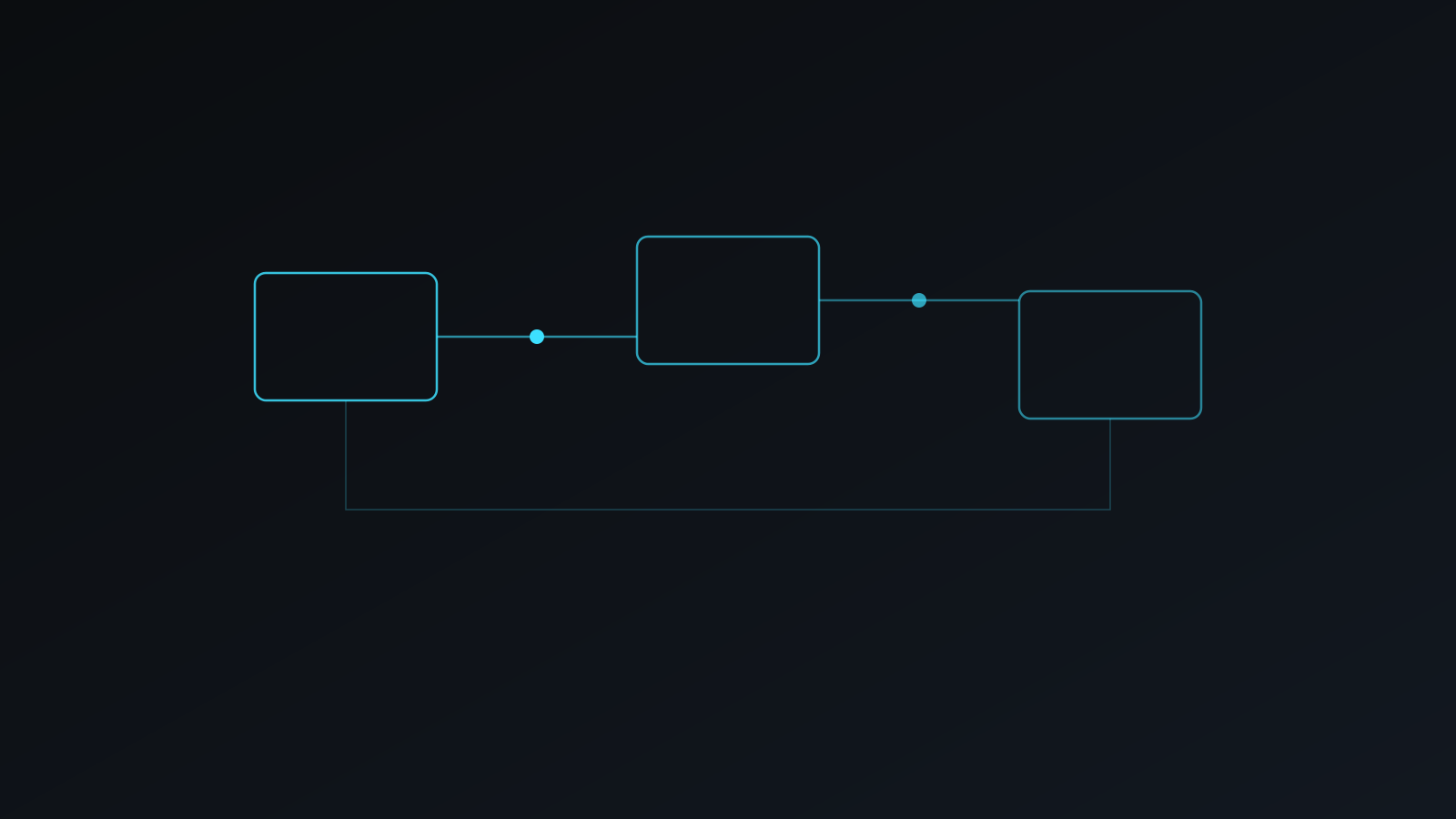
Most business software is only as strong as the connections between systems. CRM talks to billing. Billing talks to ops. Ops talks to reporting. When those links are brittle, every vendor change becomes a fire drill.
At Verato, we design integrations for the world as it is: APIs change shape, vendors raise rate limits, fields get deprecated, and “temporary” sync scripts become permanent. Survival is a first-class requirement — not a nice-to-have after launch.
Stop binding your core to a vendor’s model
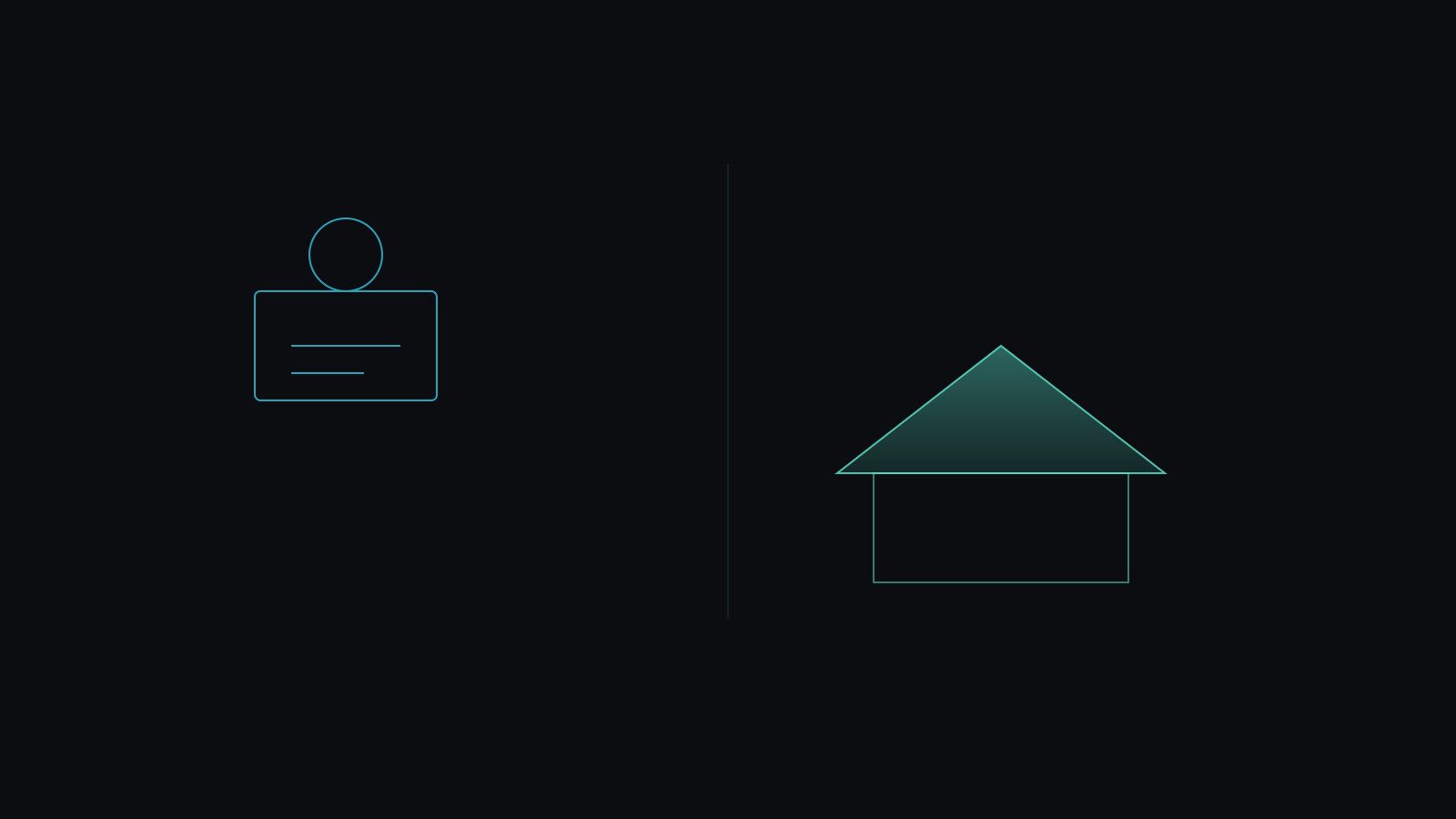
If your operational database is shaped exactly like today’s CRM objects, tomorrow’s CRM migration will rewrite half your product. Prefer a durable internal model of customers, orders, jobs, and events — then map vendors at the edges.
That mapping layer is where translation, retries, and audit history live. It is also where you isolate vendor quirks so the rest of the system stays calm.
Make failure visible and recoverable
- Idempotent writes so retries do not create duplicates.
- Dead-letter paths for payloads that cannot be processed automatically.
- Structured logs that show what was sent, received, and decided.
- Alerts when sync lag or error rates cross a threshold.
Silent sync is worse than no sync. Teams will trust a broken dashboard until a customer proves otherwise.
Integrations should fail loudly, recover cleanly, and leave a trail your team can follow.
Version for change, not for optimism
Expect API versions to move. Prefer contracts you control: webhooks with verification, clear schemas, and adapters that can be replaced without rewriting business logic. Document which fields are required, which are optional, and which are vendor-specific.
When a vendor forces a migration, the work should be mostly adapter work — not a rewrite of your core workflows.
Security and ownership belong in the design
Credentials should live in managed secret stores, not in tickets or shared docs. Access should be least-privilege. Audit trails should show who triggered what, especially for financial or customer-facing updates.
Ownership matters here too. Someone on your side — or a named partner — should know how to rotate keys, replay failed jobs, and read the logs. If only the original builder can do that, the integration is a liability.
A practical starting sequence
We usually begin with one high-value path: the loop that causes the most manual copying today. We instrument it, harden it, then expand. Broad “connect everything” programs look ambitious and often stall. Narrow, reliable paths compound.
If your systems should already be talking — and aren’t — tell us which tools and which handoffs hurt most. We will help design an integration path you can own.